
 By
By Construction dust is not the same as household dust. Fine silica particles produced by cutting concrete, brick, stone, and plasterboard are classified as a hazardous substance under the Control of Substances Hazardous to Health (COSHH) Regulations 2002. They are invisible to the naked eye, they settle on every surface in a property, they embed deep into carpet fibres, they enter ventilation systems, and they become airborne again with any air movement — including simply walking through a room.
⚠ A standard domestic hoover does not remove construction dust — it recirculates fine particles back into the air through its exhaust. Dry cloths do not remove it either — they spread it.
Construction dust removal in Edinburgh requires the right equipment, the right sequence, and in many cases a professional team with commercial-grade HEPA filtration to remove it safely and completely. This guide covers what construction dust is, why it is dangerous, how it spreads through a property, how to remove it surface by surface, and when the job requires a professional service.
What Is Construction Dust and Why Is It Dangerous?
Construction dust is the collective term for fine particles generated by building, renovation, and demolition work. There are three main types, classified by hazard level:
Silica dust — the most hazardous type, produced by cutting, grinding, or drilling concrete, brick, stone, mortar, and plasterboard. Silica particles are fine enough to penetrate deep into the lungs and cannot be expelled. Long-term exposure causes silicosis — an irreversible, progressive lung disease — as well as an increased risk of COPD and lung cancer. Regulated under COSHH.
Wood dust — produced by cutting, sanding, or routing timber. Hardwood dust is classified as a carcinogen. Softwood dust causes respiratory irritation and sensitisation. Both types are regulated under COSHH at specific workplace exposure limits.
Lower toxicity dusts — including gypsum from plasterboard, calcium carbonate from limestone, and general mixed construction debris. Less hazardous than silica or wood dust but still irritating to the respiratory system, eyes, and skin in concentrated amounts.
For homeowners and property developers, the risk from a single renovation is lower than for workers with ongoing occupational exposure. However, children, elderly residents, and immunocompromised individuals are more vulnerable to even short-term particulate exposure. The practical consequence is straightforward: construction dust that has settled throughout a property must be removed using equipment and methods that capture it — not spread it around.
How Construction Dust Spreads Through a Property
Construction dust spreads further and faster than most homeowners expect. Fine silica and plasterboard particles remain suspended in the air for several hours after they are generated — meaning a single afternoon of cutting or drilling can contaminate every room in a property through doorways, ventilation systems, and general air movement.
Once settled, construction dust sits on every horizontal surface: floors, worktops, window sills, shelves, the tops of doors, light fittings, and radiators. It also penetrates into:
- Carpet fibres — fine dust embeds below the surface layer and cannot be removed by a standard vacuum
- Ventilation ducts and extractor fans — dust drawn into the ventilation system is redistributed every time the system operates
- Soft furnishings — sofas, curtains, and cushions absorb and hold fine particles
- Behind and under appliances — particularly in kitchens where appliances create air movement
⚠ Sweeping re-suspends dust. Dry cloths spread it. Standard vacuums exhaust it back into the air. Effective removal requires damp methods and HEPA filtration — in the correct sequence, top to bottom.
Construction Dust Removal — Surface by Surface
Work through the property in sequence: start at the top of each room and work down. Clean ceilings and high surfaces before walls, walls before fixtures, fixtures before floors. Never clean floors until everything above them has been dealt with — otherwise fallen dust re-contaminates a cleaned floor.
Hard Floors (Tile, Stone, Wood, LVT)
Do not sweep hard floors with a dry broom — this re-suspends fine dust into the air. The correct sequence is:
1. HEPA vacuum the entire floor surface, including edges and corners
2. Damp mop with a wrung-out microfibre mop and clean water — dampness captures residual fine particles
3. Change mop water frequently — construction dust saturates water rapidly
4. Allow to dry fully before walking on the surface
For stone floors such as Edinburgh sandstone or slate, check whether the grout lines need specialist attention — construction dust bonds to porous grout and may require a dedicated grout cleaner rather than a standard floor product.
Carpets and Soft Furnishings
Carpets are the most challenging surface for construction dust removal. Fine particles embed below the carpet pile — below the level a standard vacuum reaches — and can be re-suspended for weeks after the build if not properly extracted.
- Use a HEPA-filtered vacuum with a motorised beater bar head — this agitates the pile and lifts embedded particles to the surface for extraction
- Vacuum slowly in overlapping passes — multiple passes lift more embedded dust than a single quick pass
- For heavily contaminated carpets, professional hot water extraction is required to remove deeply embedded fine particles
- Soft furnishings — sofas, curtains, cushions — should be HEPA vacuumed on all surfaces including undersides
- Curtains and removable covers should be laundered if significantly contaminated
Walls and Ceilings
Construction dust settles on painted walls and plasterwork and cannot be removed with a dry cloth. Use a lightly damp microfibre cloth — not wet — and wipe in long, overlapping strokes from top to bottom. Rinse the cloth frequently in clean water.
Do not use wet cloths on fresh emulsion paint — moisture can lift or streak new paint. If walls have been recently decorated, wait until the paint has fully cured before damp wiping, and test a small inconspicuous area first. Check ceilings for settled dust on coving, cornicing, and light fittings — use a HEPA vacuum with a soft brush attachment for textured or ornate surfaces.
Windows and Glazing
Construction dust creates a persistent haze on glass that water alone does not remove. Use a specialist glass cleaner applied with a microfibre cloth, then polish to a streak-free finish with a clean, dry microfibre cloth. Clean window frames, tracks, and sills with a damp cloth before cleaning the glass — dust from frames will otherwise fall onto freshly cleaned glass.
In Edinburgh’s older tenement properties, sash and case windows have multiple surfaces, tracks, and joints that accumulate dust — these require careful attention with a soft brush before wiping.
Ventilation Systems and Extractor Fans
Ventilation is the most commonly overlooked element of construction dust removal — and the most important for long-term air quality. Dust drawn into extractor fans and ventilation ducts is redistributed every time the system operates, recontaminating surfaces that have already been cleaned.
- Remove extractor fan grilles and wash in warm soapy water
- Wipe fan blades with a damp cloth — wearing an FFP2 or FFP3 mask during this step
- For ducted ventilation systems in larger Edinburgh properties, professional duct cleaning may be required if the build was extensive
- Do not operate ventilation fans during the cleaning process — this draws dust further into the ductwork
Kitchen Surfaces and Appliances
Construction dust penetrates kitchen units, drawers, and appliances during the build — even units that appear sealed will have dust inside if work was done nearby.
- Wipe all worktops and surfaces with a damp microfibre cloth
- Clean inside all cupboards and drawers — remove contents and wipe shelf surfaces
- Wipe appliance exteriors — hob, oven door, fridge, microwave
- Remove and clean extractor fan filter — construction dust clogs grease filters rapidly
- Descale and clean sink and taps — plasterboard dust combines with water and hardens on chrome surfaces if left
Bathroom Fixtures
- Wipe all tiles and sanitaryware with a damp cloth — plaster dust can etch chrome and ceramics if left with moisture
- Clean grout lines — dust embeds in porous grout and requires a stiff brush and appropriate cleaner
- Descale taps and showerheads — construction work often involves water being turned off and on, dislodging limescale deposits
- Clean mirror and glazed panels to streak-free finish
Equipment You Need for Safe Construction Dust Removal
The difference between equipment that removes construction dust and equipment that spreads it comes down to filtration and method.
- HEPA vacuum (H13 or H14 rated) — the most important piece of equipment. A HEPA filter at H13 standard captures 99.95% of particles at 0.3 microns. Fine silica dust particles fall in this range. Standard domestic vacuums exhaust fine particles back into the air.
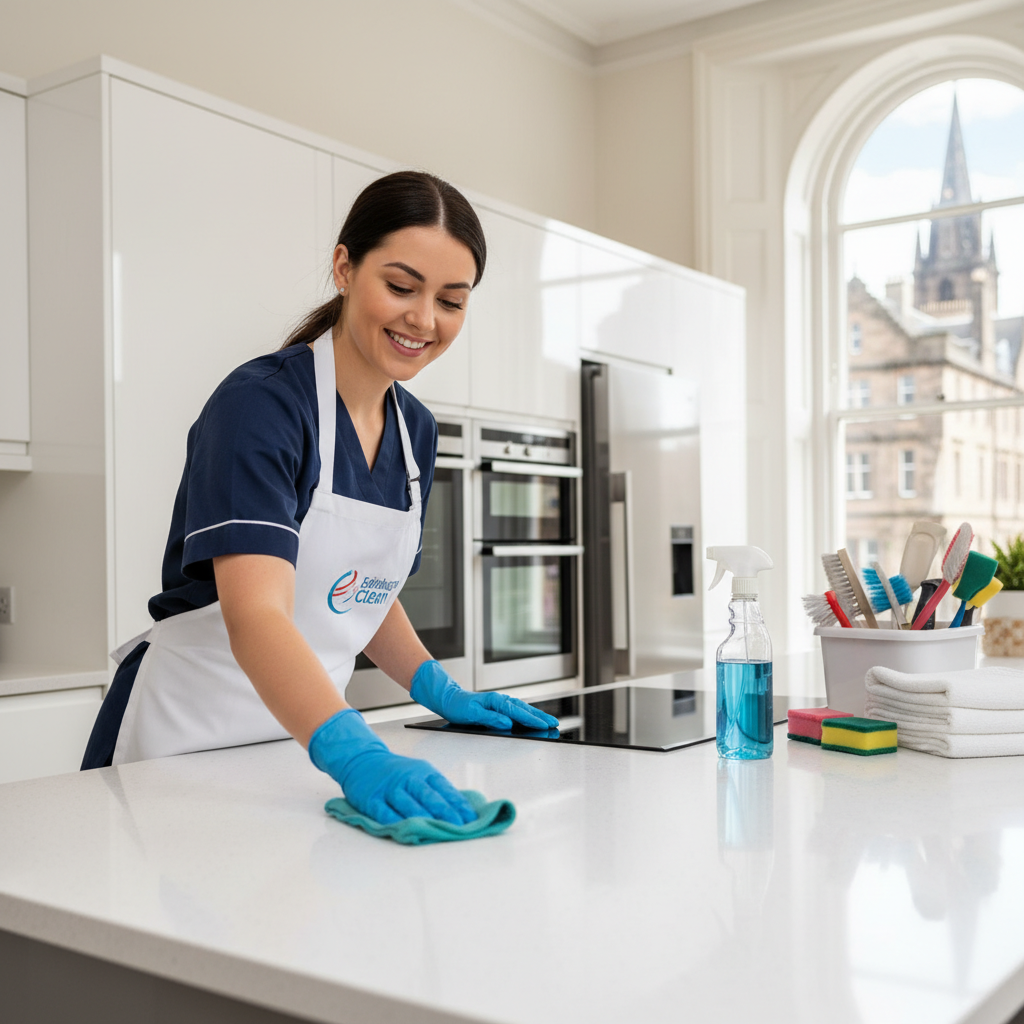
- Damp microfibre cloths — not dry cloths, not paper towels. Microfibre holds particles electrostatically rather than spreading them. Damp application captures fine dust rather than lifting it into the air.
- FFP2 or FFP3 respiratory masks — for anyone carrying out construction dust removal themselves, particularly from heavily contaminated areas or ventilation systems. A standard dust mask does not provide adequate protection.
- Clean water, changed frequently — dirty mop water redistributes dust. Change water as soon as it becomes visibly cloudy.
⚠ Do not use: dry brooms, dry cloths, standard domestic vacuums, or compressed air. These spread construction dust rather than removing it.
When to Call a Professional Construction Dust Removal Service in Edinburgh
Some construction dust scenarios are beyond what a homeowner can safely or effectively manage with domestic equipment. Call a professional service when:
- Dust is visible on surfaces several hours after cleaning — fine particles are still suspended and resettling
- Building work involved silica-producing materials across a large area — concrete grinding, stone cutting, or extensive plasterboard work
- The ventilation system has been running during the build and may have drawn dust into the ductwork
- Carpets throughout the property are contaminated — professional hot water extraction is required
- The property is to be occupied by vulnerable individuals — children, elderly residents, or those with respiratory conditions — before dust is fully removed
- The build covered multiple rooms or floors — the cumulative volume of dust requires commercial-grade equipment within a practical timeframe. And want to know more? Then read our Post construction cleaning checklist.
Why Edinburgh Property Owners Choose MT Cleaners for Construction Dust Removal
MT Cleaners provides professional construction dust removal and after builders cleaning in Edinburgh with commercial-grade HEPA equipment, specialist products, and a fully insured team — covering everything from single-room refurbishments to full property new builds.
- HEPA commercial vacuums — H13-rated filtration that captures fine silica particles standard vacuums miss
- Specialist surface products — appropriate for each surface type including stone, tile, glass, and chrome
- Trained, insured team — essential on newly completed or renovated Edinburgh properties
- Fixed pricing — agreed upfront before the team arrives, no hourly surprises
- Edinburgh-wide coverage — city centre, New Town, Leith, Marchmont, Portobello, and beyond including West Edinburgh and the Queensferry corridor
- WhatsApp booking — fast quote at +44 7747 675575 and See what our customers say.
Get a free quote — fixed pricing, professional equipment, safe and complete dust removal. → https://mtcleaners.co.uk/contact/
FAQs about Construction Dust Removal in Edinburgh — How to Remove It Safely and Completely
How do you get rid of construction dust?
Getting rid of construction dust requires the right sequence and the right equipment — not just more effort with a standard hoover. Start by sealing off any rooms not affected by the build to prevent further spread. Work top to bottom in every room: ceilings and high surfaces first, then walls, then fixtures and fittings, then floors last. Use a HEPA-rated vacuum (H13 or H14) for all vacuuming — standard domestic vacuums exhaust fine particles back into the air rather than capturing them. Follow vacuuming with damp microfibre cloths on all hard surfaces — the dampness captures the fine residual particles the vacuum leaves behind. Change cloth and water frequently. For carpets, use a HEPA vacuum with a motorised beater bar in slow, overlapping passes — heavily contaminated carpets require professional hot water extraction. Clean ventilation grilles and extractor fans separately, wearing an FFP2 mask. Do not sweep, do not use dry cloths, and do not operate the ventilation system during cleaning. For large properties or those with silica-producing dust from concrete, stone, or plasterboard, a professional construction dust removal service with commercial HEPA equipment is the only way to ensure complete removal.
How do you detox from construction dust?
If you have been exposed to construction dust — particularly silica dust from concrete, stone, or plasterboard — there are practical steps you can take to support your respiratory health. Remove yourself from the contaminated environment and get fresh air immediately after any exposure. Shower and change clothes to remove surface particles before they can be re-inhaled. Stay well hydrated — this supports the body’s natural respiratory clearance mechanisms, which move particles from the airways via the mucociliary escalator. Avoid smoking or exposure to other respiratory irritants while the airways are inflamed. If you experience persistent coughing, shortness of breath, chest tightness, or wheezing following construction dust exposure — particularly from silica-producing materials — consult a GP promptly. A single significant exposure to silica dust does not cause silicosis (which is a disease of cumulative occupational exposure), but acute silicosis from extremely heavy single-event exposure is documented and any respiratory symptoms warrant medical attention. The most effective way to avoid post-exposure effects is prevention: use FFP2 or FFP3 masks during any contact with construction dust and arrange professional dust removal before reoccupying a property after building work.
How much is a 1-hour clean?
A 1-hour professional clean in Edinburgh costs between £18 and £28 depending on the cleaning company and type of service. In the context of construction dust removal, however, a single hour of cleaning is rarely sufficient — and attempting to address a significant construction dust problem in one hour with domestic equipment is unlikely to produce a safe result. Construction dust removal is a systematic, sequential process that must cover every surface in the affected area from top to bottom. For a single room affected by building work, a professional team might complete the dust removal in 60–90 minutes. For a full property renovation, the process takes considerably longer and requires commercial HEPA equipment that cannot be replicated with a domestic vacuum and cloths. MT Cleaners provides fixed-price construction dust removal quoted upfront based on the scope of the job — a more reliable and cost-effective approach than booking an open-ended hourly rate for a task where the time required is difficult to estimate in advance.
What is grandma’s simple trick to eliminate dust?
The household wisdom passed down for generations is to use a slightly damp cloth rather than a dry one when dusting surfaces — and the science behind it is sound. A damp cloth captures dust particles through surface tension and moisture adhesion, holding them in the cloth rather than knocking them into the air to resettle elsewhere. Dry cloths and feather dusters simply redistribute dust from one surface to another or suspend it temporarily in the air. Modern microfibre cloths work on the same principle — their fibres create an electrostatic charge that attracts and holds fine particles rather than spreading them. For general household dust, a lightly damp microfibre cloth wiped in overlapping strokes is genuinely effective. For construction dust, however, grandma’s trick alone is not sufficient — the volume and particle size of construction dust requires HEPA filtration vacuuming before damp wiping, and the top-to-bottom sequencing through every room that a post-build clean demands. The damp cloth principle applies as part of the process, not as a replacement for it.
Book Your Construction Dust Removal Service in Edinburgh
Construction dust is a health hazard that requires the right equipment and the right approach to remove safely. MT Cleaners provides professional construction dust removal and after builders cleaning across Edinburgh — from the city centre and New Town to Leith, Portobello, Marchmont, and West Edinburgh — with commercial HEPA vacuums, fixed pricing, and a fully insured team.